


Written by Julien Ricciarelli-Bonnal
21 June 2026
Internet Users Are Starting to Prefer Sources They Already Know
For many years, the promise of the internet was simple: give everyone instant access to an almost unlimited amount of information. That promise remains largely intact today. In just a few seconds, anyone can find articles, videos, studies, reviews or analyses on virtually any topic. Yet a subtle shift seems to be taking place in the way many people consume information online. Faced with an overwhelming volume of content, users are increasingly paying attention not only to what is being said, but also to who is saying it.
At first glance, this trend may seem paradoxical. The easier information becomes to access, the more important its source appears to be. Where users once focused primarily on finding answers, they are now paying closer attention to the media outlets, authors, experts and communities behind those answers. A recognised source often enjoys a level of trust and attention that anonymous content struggles to achieve.
This does not necessarily reflect a growing distrust of the internet itself. Rather, it appears to be a natural response to an environment where the amount of available information is expanding far faster than the time people have available to consume it.
Information Overload Is Changing User Behaviour
A decade ago, one of the main challenges of the internet was finding information. Today, the challenge is often deciding which information deserves our attention. Search engines, social networks, video platforms, newsletters, online communities and artificial intelligence tools all compete to deliver content to users every day.
As this volume continues to grow, people naturally develop filtering mechanisms. Many users gradually create their own list of trusted sources. They identify certain media outlets, journalists, authors or experts whose work they value and return to them whenever they want to understand a topic in greater depth.
This behaviour is not entirely new. Similar patterns existed long before the digital era through newspapers, television and radio. The difference is that it has become significantly more important in a digital ecosystem where content can be produced and distributed at an unprecedented scale.
Trust Has Become a Navigation Tool
This evolution highlights a reality that is sometimes overlooked: trust has become a practical tool for navigating the internet. When users encounter information from a source they already know, they save time. They understand the author’s perspective, the publication’s editorial approach and the general level of expertise involved. This familiarity helps them assess information more efficiently.
Unknown sources require additional effort. Who wrote this? What experience do they have? What are their intentions? Can the information be trusted? These questions are not always consciously asked, but they strongly influence how content is perceived.
The rise of artificial intelligence has accelerated this trend. People now understand that well-written content can be generated quickly and at scale. This does not necessarily reduce the value of content itself, but it increases the importance of knowing where that content comes from. The easier content becomes to produce, the more valuable credibility becomes.
This shift extends far beyond the world of artificial intelligence.
Communities Are Regaining Importance
The growing popularity of online communities illustrates this phenomenon perfectly. Platforms such as Reddit, specialist newsletters, professional groups and niche forums attract users who are looking for more than simple answers. They are looking for context, experience and discussion.
What makes this trend particularly interesting is that trust is not built solely around individuals or brands. It can also be built around communities. When someone adds the word “Reddit” to a Google search, they are not necessarily looking for Reddit itself. They are often looking for a place where multiple people have shared experiences, disagreed, debated and contributed different perspectives.
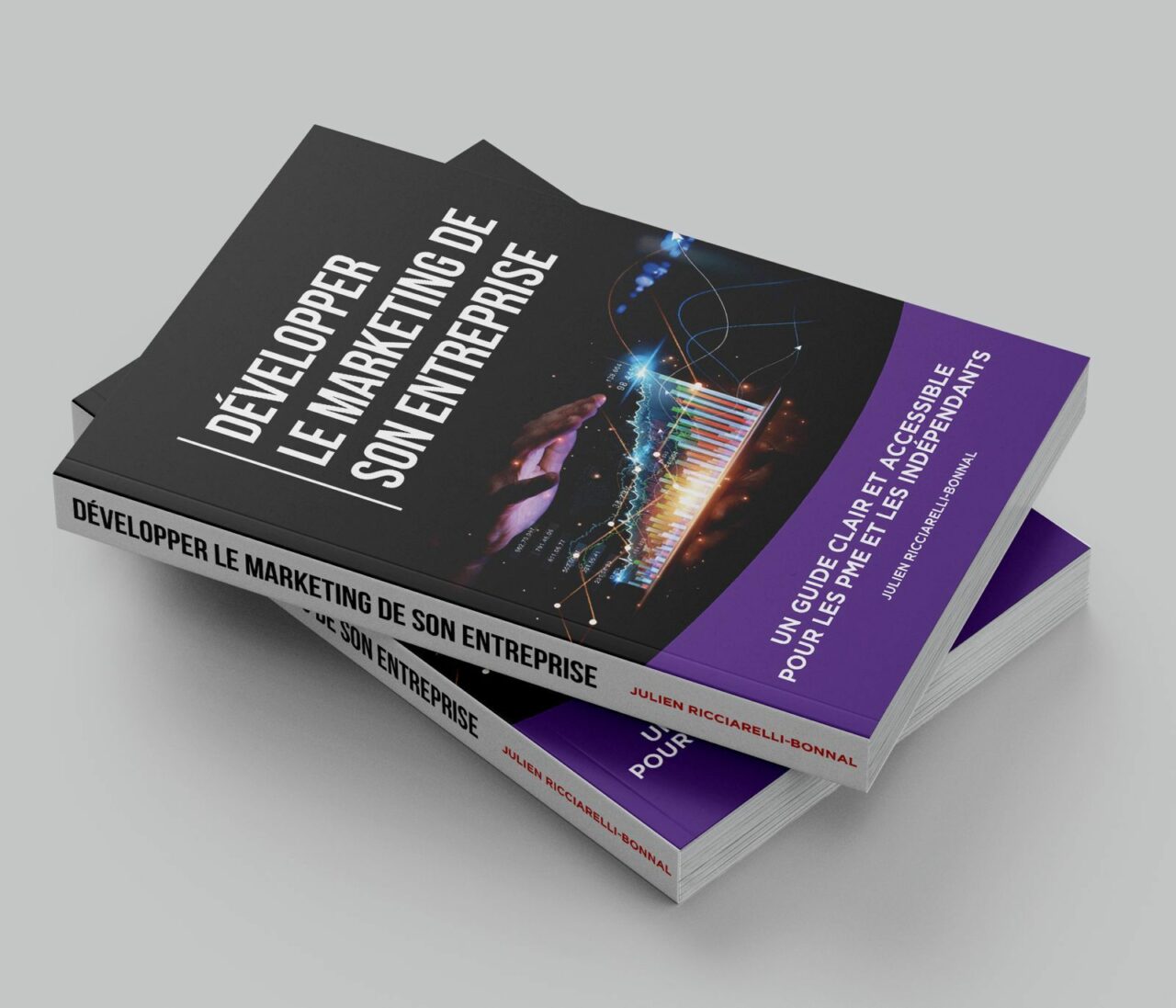
This idea is closely related to themes I explore in my book Développer le marketing de son entreprise, published in late 2025. One of the key arguments I make is that credibility is rarely built through a single message or a single tool. Instead, it emerges through the accumulation of consistent signals over time.
Trust remains a long-term construction.
Brands Must Become Trusted References
This evolution has direct implications for businesses. For many years, visibility was considered the primary objective of digital marketing. Being seen, generating traffic and increasing reach were often viewed as the most important performance indicators. While these objectives remain relevant, they are no longer sufficient on their own.
Internet users increasingly seek reliable reference points in a crowded digital environment. Businesses that succeed in becoming recognised and trusted sources gain a significant advantage. They are no longer merely visible. They become destinations.
This distinction matters. There is a substantial difference between an audience that discovers content accidentally and an audience that actively seeks out a source because it values its perspective. This is one reason why marketing expertise increasingly focuses on credibility, consistency and editorial quality.
The objective is no longer simply to attract attention. It is to earn it repeatedly over time.
A Return to Very Human Behaviours
At first sight, this trend may appear surprising in an increasingly technological world. Yet it is rooted in deeply human behaviour. Faced with uncertainty, people naturally seek reference points. Faced with abundance, they develop habits. Faced with complexity, they turn towards sources they trust.
The internet is no exception. Technologies evolve, platforms multiply and tools become more sophisticated, but human behaviour often remains remarkably stable. Users continue to seek people, media outlets, communities and brands that help them make sense of the world around them.
This reality is already influencing many areas of strategies and commercialisation. In an environment where content can be produced almost endlessly, the real value may no longer lie solely in the information itself, but in the trust placed in the person or organisation delivering it.
Written by Julien Ricciarelli-Bonnal
21 June 2026