


Written by Julien Ricciarelli-Bonnal
14 December 2025
Notion, Trello, ClickUp: how to choose the tool that actually structures your growth
In 2025, selecting a productivity tool is no longer an aesthetic choice or a matter of personal comfort, but a strategic decision. Behind these platforms that promise organization, clarity and performance lies a much deeper issue: a company’s ability to structure its work, define its priorities and install an operational system that genuinely supports its growth. Notion, Trello and ClickUp dominate this landscape, each with its own philosophy and unique value proposition, yet very few entrepreneurs realise that the real choice is not the tool itself, but the mental framework it imposes.
Choosing a tool is not choosing an interface; it is choosing a way of operating. And for any business that aims to evolve, the tool that supports growth is not the one with the most features, but the one that becomes an extension of its method.
Notion: the power of construction, but the trap of infinity
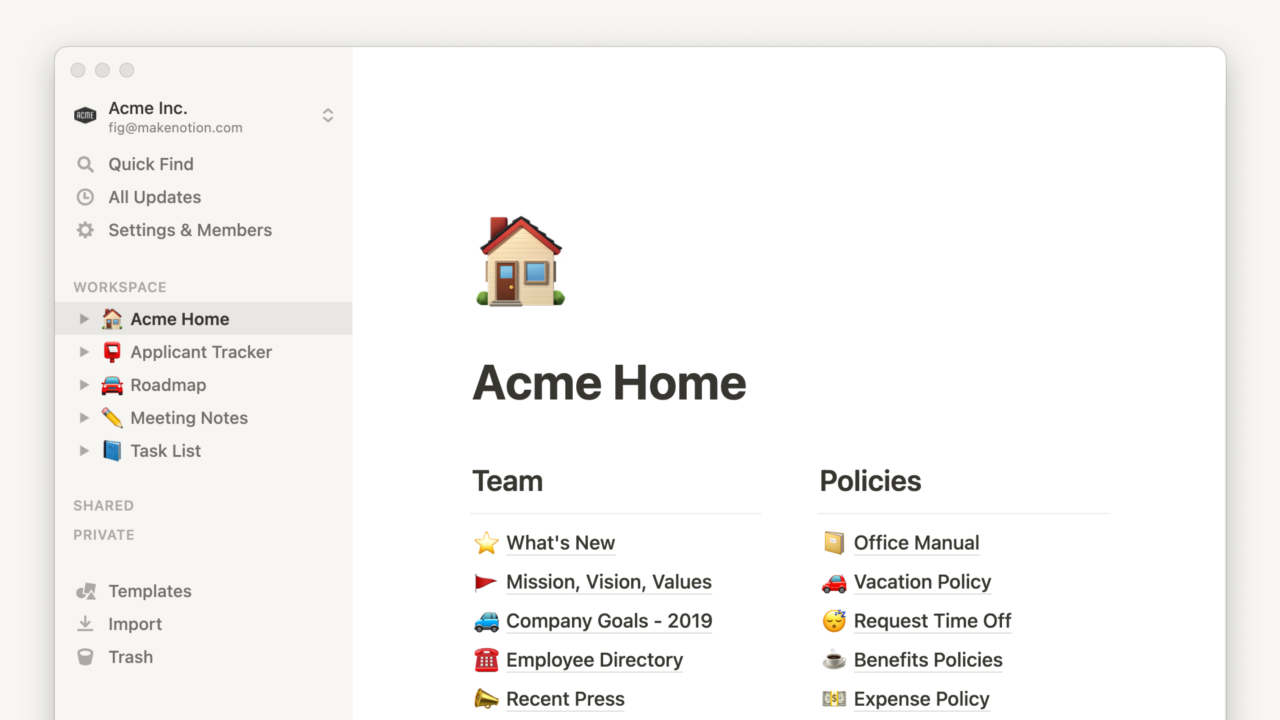
Notion is perhaps the most fascinating tool on the market, because it offers almost total structural freedom. You can build a full knowledge base, strategic documentation, a project management system, internal procedures, an editorial calendar or a collaborative workspace. Its strength lies in its modularity: Notion adapts to the way you think rather than forcing its own logic. But this strength can become a weakness.
Many entrepreneurs use Notion as a creative playground, a digital sandbox where they build complex and visually elegant systems that remain disconnected from the real rhythm of the business. Notion demands methodological maturity: without clear thinking, the tool becomes a maze. A poorly structured database creates cognitive overload, difficulty prioritizing and, paradoxically, a considerable loss of time.
Notion is not built for those who want a ready-made tool, but for those who want to build a tailor-made architecture capable of supporting their growth. It is for businesses that know where they are going, that have defined their processes, and that need a place to bring them to life.
Trello: operational simplicity, but a limit of depth
Trello, with its boards and cards, remains one of the most fluid and intuitive platforms. It is perfect for visualizing workflow, organizing a project or managing a small team without unnecessary complexity. Trello respects the logic of movement: a task progresses physically from one column to the next, and each card tells the story of an ongoing process. Its clarity is a strength that gives immediate comfort and allows anyone to understand the state of a project in seconds.
This simplicity is powerful, but becomes restrictive as the business grows in complexity. Teams quickly face a multiplication of boards, an overload of cards, a lack of centralisation and, above all, an absence of structural depth. Trello organizes tasks; it does not organize an organisation. It accelerates action but does not support strategy.
Trello is ideal for teams that want to move fast, without a sophisticated system, and that privilege simplicity. But when a business needs systemic vision, interconnected workflows, hierarchical processes or structured documentation, Trello reaches its limits.
ClickUp: the war machine, but an excess of armor
ClickUp has become one of the most complete tools in recent years, sometimes even too complete. Designed to replace numerous applications, it aims to become the company’s operational hub. Task management, documents, automation, reporting, communication, objectives, performance tracking: ClickUp does everything, sometimes to the point of wanting to absorb too much.
Its power comes from a deep architecture that allows teams to install a real operational method. But this functional richness can be intimidating. It requires learning, discipline and onboarding that can discourage less structured teams. The promise of power becomes a burden: an oversized tool for undersized needs.
ClickUp is a tool for mature organisations, those that have clarified their objectives, roles and internal processes. It does not create structure; it amplifies it. Well integrated, it accelerates growth; poorly integrated, it slows everything down.
Your business is moving forward, but your strategy still isn't clearly defined?
Priorities, commercial messaging, visibility, new client acquisition:
Ricciarelli Consulting helps you make the right decisions,
structure your strategy, and increase your impact.
➜ Understand how Ricciarelli Consulting can support you.
The real criterion: your degree of clarity
The tool does not determine growth. The clarity you bring to it does. Notion amplifies vision; Trello accelerates action; ClickUp structures performance. Each has its place, but none will ever replace strategic thinking about how a team must function.
An entrepreneur who cannot prioritise will not become organised with Notion.
A team that cannot decide will not move faster with Trello.
A company without method will never leverage the power of ClickUp.
The tool does not create discipline; it reveals it.
In 2025, choosing between Notion, Trello and ClickUp comes down to one essential question: what does your growth truly require? Freedom, fluidity or structure? The ideal tool is not the one that shines by its interface, but the one that disappears behind your method.
Written by Julien Ricciarelli-Bonnal
14 December 2025