


Written by Julien Ricciarelli-Bonnal
31 July 2026
The Essentials
Julie Masino will step down as CEO of Cracker Barrel on 10 August 2026, nearly a year after a modernisation programme triggered an extraordinary backlash among the American chain’s customers. Removing the historic character from its logo, simplifying its visual identity and redesigning some restaurants were interpreted not as harmless updates, but as an attempt to erase a shared cultural heritage. Cracker Barrel quickly restored its former logo and abandoned the new restaurant design. The episode shows that a long-established brand no longer belongs exclusively to the company that legally owns it. Once generations of customers have incorporated it into their own memories, changing it requires negotiating with a form of emotional ownership.
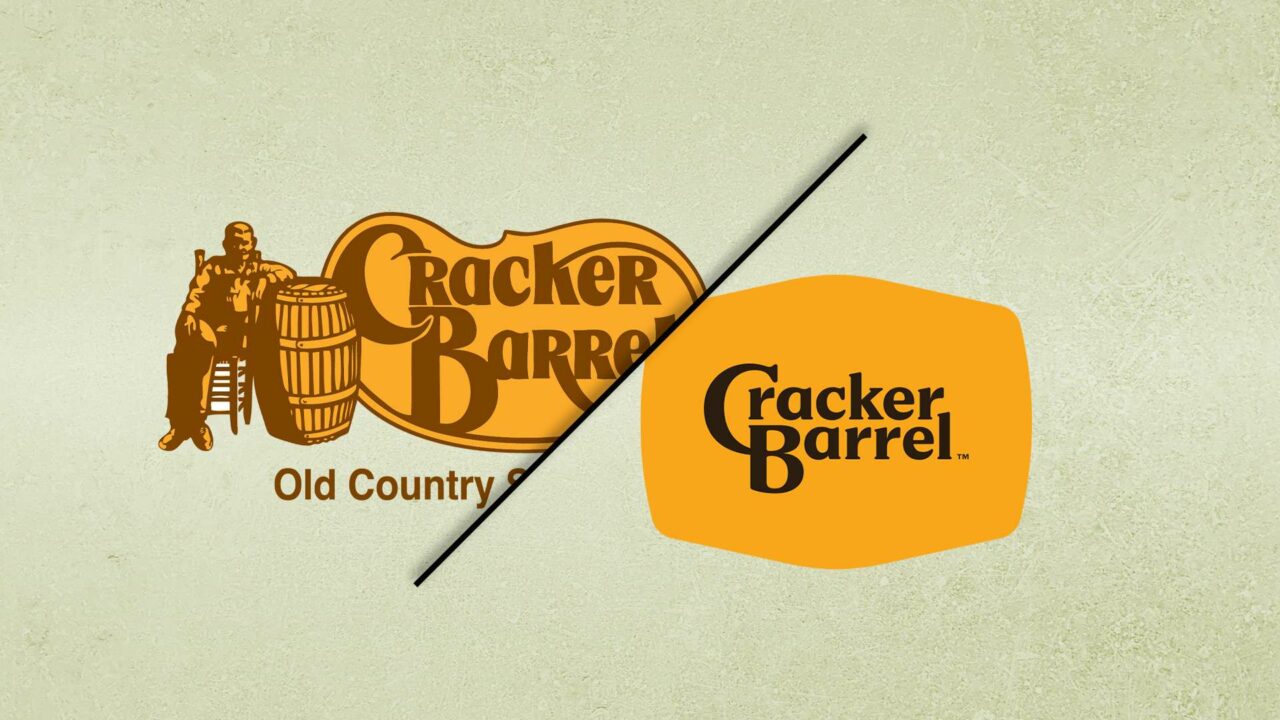
Cracker Barrel had legitimate reasons to change. Founded in 1969, the American restaurant and retail chain, built around an idealised vision of rural America, needed to attract younger customers, reverse declining traffic and adapt an ageing concept to new consumer habits. Julie Masino, who became chief executive in 2023, therefore launched a broader modernisation programme covering menus, restaurants and the company’s visual identity.
The intention was to make the brand feel more contemporary. Instead, the programme revealed how deeply customers were attached to elements that management may have regarded as adjustable components of a commercial identity. When Cracker Barrel introduced a simplified logo in August 2025, removing the figure commonly known as “Uncle Herschel” and the barrel beside him, the reaction went far beyond a design debate. Within days, the company restored its previous logo and later suspended the redesign of its restaurants.
In July 2026, Cracker Barrel announced that Masino would leave both the chief executive role and the board. The company did not formally present her departure as a direct consequence of the rebranding controversy, and the chain was already facing broader commercial difficulties. Even so, the sequence has turned the episode into a striking case study: can a company still claim complete control over a brand once its customers regard that identity as part of their own history?
Cracker Barrel Did Not Simply Change a Logo
The logo abandoned by Cracker Barrel was not merely an outdated illustration waiting to be refreshed. It showed a man seated beside a barrel, within a visual universe that matched the chain’s restaurants, their porches, rocking chairs, antique objects and promise of a familiar, old-fashioned America. The identity could certainly appear dated, but that dated quality was also part of its commercial value.
By removing the character and simplifying the visual system, Cracker Barrel did not eliminate an irrelevant detail. It removed a symbol through which customers instantly recognised the company and connected it with a particular experience. The problem was therefore not limited to whether the new logo looked cleaner, worked better on digital screens or followed contemporary design standards. It communicated less than the identity it replaced.
The redesign of several restaurants reinforced that impression. The test locations became lighter, cleaner and more modern, following a familiar logic in contemporary retail renovation. Yet Cracker Barrel does not sell meals alone. It sells continuity, atmosphere and the feeling of entering a place that has resisted at least some of the standardisation affecting the wider hospitality industry.
By treating these characteristics as problems to correct, the company appeared to be modernising Cracker Barrel by gradually removing what made Cracker Barrel recognisable. Customers did not reject change simply because it was new. They reacted because the brand seemed to be turning itself into a more neutral version of what it had been.
Customers Had Acquired a Form of Emotional Ownership
Legally, a company owns its name, logo, restaurants and commercial assets. It can redesign, sell or discontinue them. Legal ownership, however, does not fully explain the relationship that develops around a brand that has been present for several decades.
Consumers give brands meanings that companies can never control entirely. They associate them with childhood memories, family habits, particular regions, social rituals or a way of life. As those associations accumulate, the brand becomes a shared cultural object. The company owns the signs, but the public owns part of what those signs have come to represent.
This emotional ownership does not grant customers a formal veto. It gives them something commercially more powerful: the ability to withdraw their loyalty, publicly challenge the decision and transform a routine corporate change into an identity crisis. Management then discovers that what it viewed as an asset to optimise was experienced by its audience as a heritage to protect.
Long-established brands face a difficult paradox. They must evolve to remain relevant, but their past success reduces their freedom to change. The more deeply their identity has entered customers’ lives, the less they can treat it as a replaceable layer of design. What gives the brand commercial strength also becomes a strategic constraint.
The Culture War Amplified a Marketing Error
The Cracker Barrel controversy quickly moved into American politics. Conservative commentators presented the redesign as another example of a company rejecting its history in favour of an impersonal or supposedly “woke” aesthetic. Donald Trump entered the debate and publicly encouraged the chain to restore its previous logo. A design decision became another episode in the country’s broader culture war.
That politicisation dramatically increased the cost of the mistake, but it should not obscure its marketing origins. Before becoming an ideological symbol, the new identity had already weakened Cracker Barrel’s ability to communicate its difference. The political battle attached itself to a rupture customers had perceived between the company’s new direction and the brand they recognised.
It would therefore be simplistic to conclude that every attempt to modernise a heritage brand will now provoke a conservative revolt. Consumers accept changes to products, services, identities and customer experiences every day. They accept them when the change improves the brand without implying that the company looks down on what people previously valued.
The crisis might also have been less severe had Cracker Barrel explained more clearly what would remain, what would change and why. A rebranding exercise is never limited to presenting a new design accompanied by a few statements about modernity. It requires understanding what customers actually recognise and value in a brand, including the elements that may appear old-fashioned to the teams managing it.
Modernisation Does Not Have to Mean Erasure
A historic brand cannot survive indefinitely by repeating its past. Cracker Barrel probably did need to improve parts of its restaurants, update its offer and reconnect with younger audiences. Its historic identity could not, by itself, solve declining traffic, operational problems or structural changes in the restaurant sector. Restoring the old logo will not automatically restore long-term growth.
Modernisation could nevertheless have started from the brand’s heritage instead of attempting to reduce its presence. A restaurant can become more functional without becoming generic. A logo can be refined without losing its central character. A customer experience can become smoother without removing the details that make it distinctive. The most intelligent transformations do not begin by asking which elements look old. They ask which elements still carry meaning.
Companies frequently confuse familiarity with fatigue. Employees and executives see the same colours, symbols and spaces every day, and eventually become tired of them. Customers encounter them far less frequently and may instead find reassurance in their consistency. What feels repetitive inside the company can remain highly distinctive outside it.
Cracker Barrel did not fail because its identity was untouchable. It failed because the company appeared to change that identity before determining precisely what customers were unwilling to lose. It wanted to attract people who no longer visited its restaurants, but began by unsettling those who still did.
A Brand Can Be Managed, but No Longer Defined Alone
Julie Masino’s departure should not become a convenient explanation that attributes every difficulty to one executive and one logo. Cracker Barrel was facing wider commercial challenges, and the company says the succession followed an organised process. David Deno will take over as chief executive on 10 August 2026, while Masino will remain as an adviser until October.
Her departure nevertheless gives the episode particular significance. A strategy designed to rejuvenate the company ultimately demonstrated that Cracker Barrel could no longer be redesigned exclusively from a corporate office, through modernisation targets and visual mood boards. Symbolically, the brand already belonged to everyone who had grown up with it.
Companies remain responsible for their decisions and must retain the ability to transform their businesses. But they should recognise that a brand’s value does not lie only in what the company originally created. It also lies in what customers have made of it, the memories they have attached to it and the place they have allowed it to occupy in their lives.
A strong identity is not decoration that can be simplified without consequence. It is an implicit agreement between a company and its audience. Cracker Barrel probably believed it was updating the appearance of that agreement. Its customers believed the company was trying to terminate it.
👉 A brand can evolve without abandoning what gives it meaning. Ricciarelli Partners helps companies transform their strategy without diluting their identity.
Written by Julien Ricciarelli-Bonnal
31 July 2026